
Local Column
COLUMN

5 corals you can see in Ishigaki Island! Ishigaki Island resident staff will give you a thorough explanation!
Hello everyone!
One of the largest activity stores in Ishigaki Island
Ishigaki Island ADVENTURE PiPiIt is!
The sea of Ishigaki Island is emerald green with outstanding clarity.
The coral reefs that color its waters are an integral part of both marine activities and the marine ecosystem.
This article introduces the unique coral reefs of Ishigaki Island.
Table of Contents
The coral reefs of Ishigaki Island are characterized by...
Why we recommend it
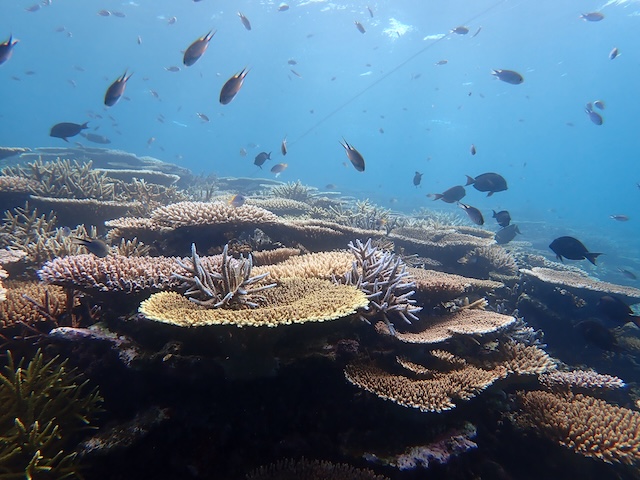
The sea of Ishigaki Island is known for its colorful coral colonies, and many types of coral reefs are distributed.
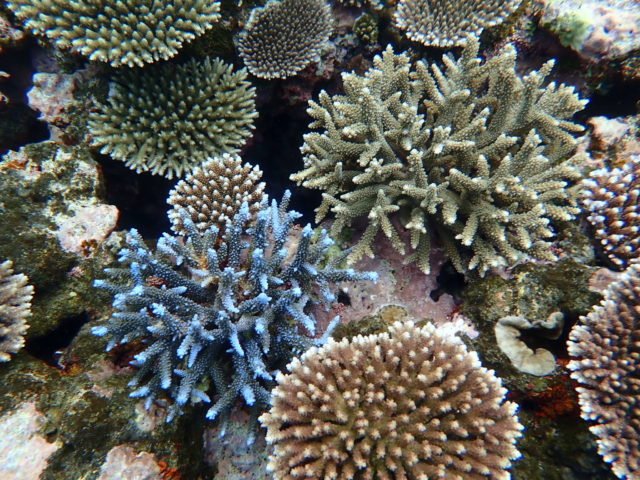
The most famous of these is probably the blue coral that can be seen in the Shiraho area.

When we think of coral, we think of pink and red, but many people may not be familiar with blue coral.
Blue coral has iron formation on its skeletonBlue-green because it is rich in water and appears bluer than other species.It is called Osango.

There are many types of corals on Ishigaki Island, but blue corals seem very different because of their characteristics.
such (about the actions of the listener, or about ideas expressed or understood by the listener)Only on Ishigaki Island can you enjoy a rich variety of corals.It is.
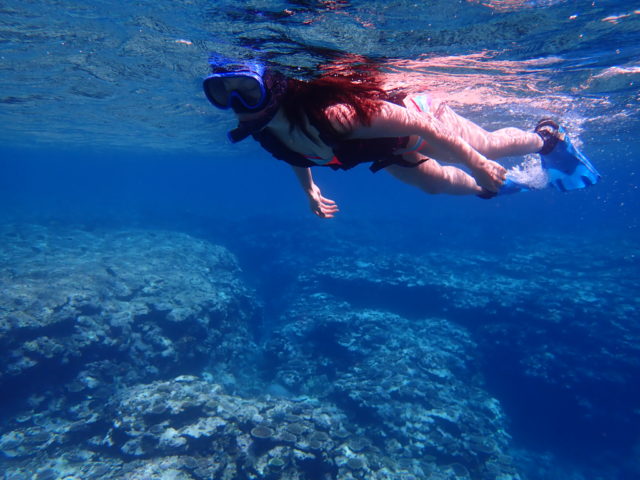
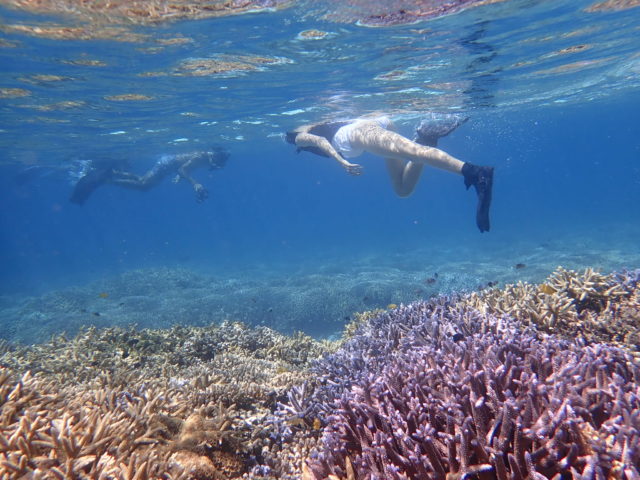
Please consider diving and snorkeling when you visit Ishigaki Island.
Types of coral reefs on Ishigaki Island
As mentioned at the beginning of this article, Ishigaki Island is home to an abundance of corals. It is said that there are hundreds of species.
We would like to introduce some of the representative corals that can be seen on Ishigaki Island.
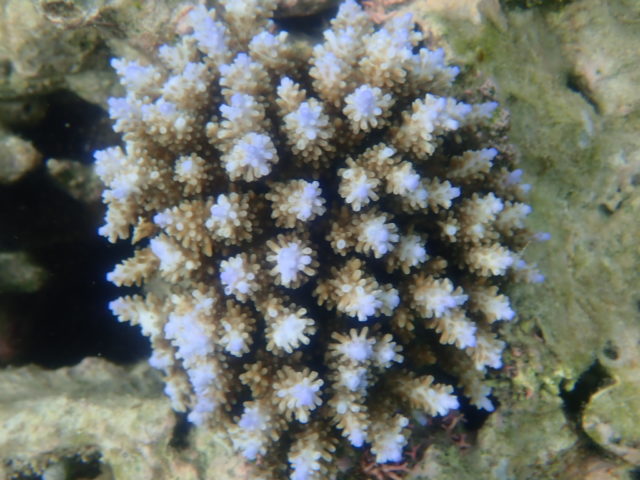
Coral of Ishigaki Island (1) "Hamasango
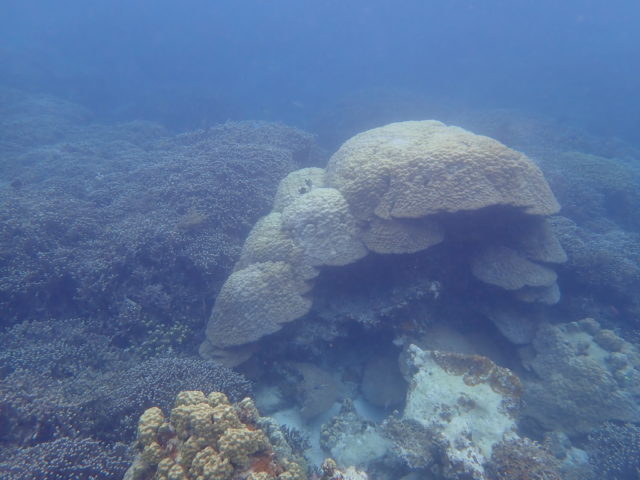
coral reefis a branching, hemispherical coral belonging to the family Hamacoralliidae of the order Laminaria, and is found on the margins and slopes of coral reefs and at depths of several meters.
The color varies from brown, yellowish brown, green, and blue, and the tips of the branches are smooth.
Polyps, which are small individuals that gather to form groups, feed, defecate, and lay eggs through their tentacled mouths.
Hamas coral polyps of about 1.5 mm in diameter are characterized by their ability to open even during the day.
Coral of Ishigaki Island (2) "Blue coral
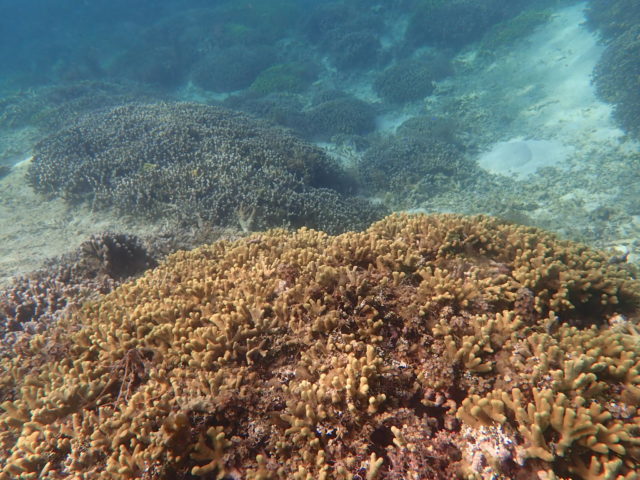
Next, I'd like to introduce you to the"Blue coral."It is.
Blue coral is a member of the eight radiating corals, and its polyps aggregate to form large, stiff aggregations that form coral reefs.
When several are gathered together as a group, they appear brown, but the internal skeleton with polyps is blue koma to."blue coral (Corallium japonicum)It is called "the
Vast colonies of blue corals can be seen on the Shiraho Coast and are world famous for being extremely valuable.
Coral of Ishigaki Island (3) "Greenish Rock" (Japanese only)
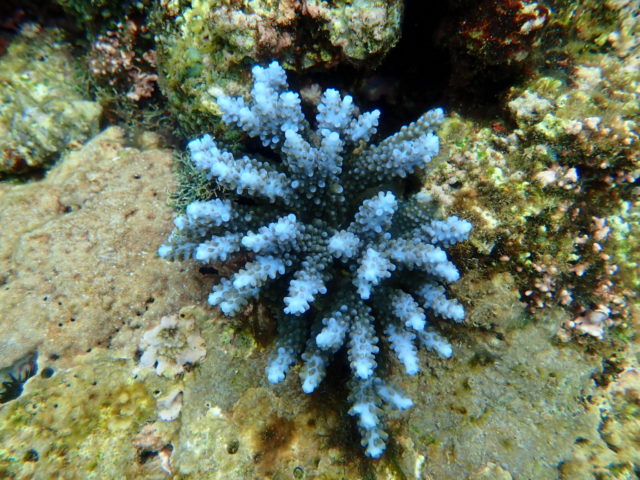
Asian greenling (Hexagrammos agrammus)is a coral that belongs to the family of the order Hydrocysticercidae.
It is a so-called typical reef-building coral, forming a solid calcareous community, with numerous branches branching off and clustered together from a flat, spreading base.
They are symbiotic with zooxanthellae and are brown, light red, or light blue in color.
It is very robust and is often used for ornamental purposes because it is better adapted to its environment than other species.
Coral of Ishigaki Island (4) "Thistle Coral
thistle coral (Corallium japonicum)is a member of the family Biagaridae of the order Laminariales, with branches branching into cylindrical or rappel-like segments, forming a clumped group.
It is about 8 mm in diameter and is abundantly distributed in quiet inlets. The type of job is transparent green in color.
Coral of Ishigaki Island (5) "Kikumeishi
chrysanthemum (Chrysanthemum indicum)is a member of the family of the corals in the order Cyprinidae, and like the green coral, it is a representative reef-building coral.
They form clumps or hemispherical clusters, ranging in size from tens of centimeters to several meters. The capsules protrude slightly above the surface, leaving gaps between adjacent capsules.
The division of individual insects forms groups, and it is known that polyps extend their tentacles at night to catch and eat plankton when feeding.
Coral of Ishigaki Island (6) "Hanagasa Coral
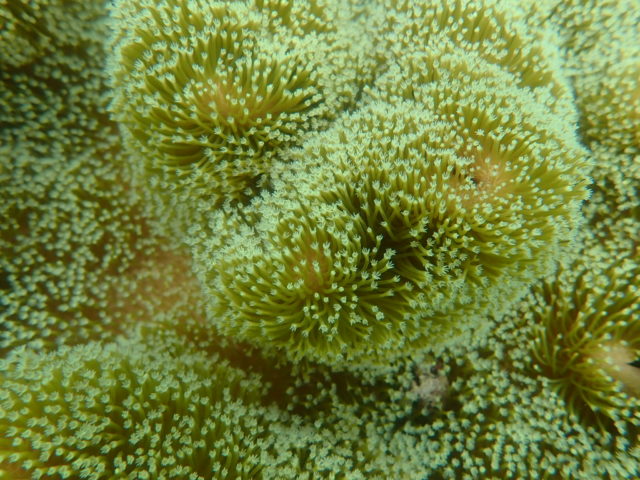
The last coral to be introduced islongnose coral reefIt is.
The overall color is bright, but be sure to avoid getting close to the eight rim and lid tentacles that arise from the edges of the lice umbrella, as they cause severe pain when they sting.
If you want to enjoy your trip to the fullest,Enjoy safely with a guide without overdoing it.is the best!
Enjoy the Okinawan sea to the fullest in a safe and secure condition.
4 Diving Spots in Ishigaki Island
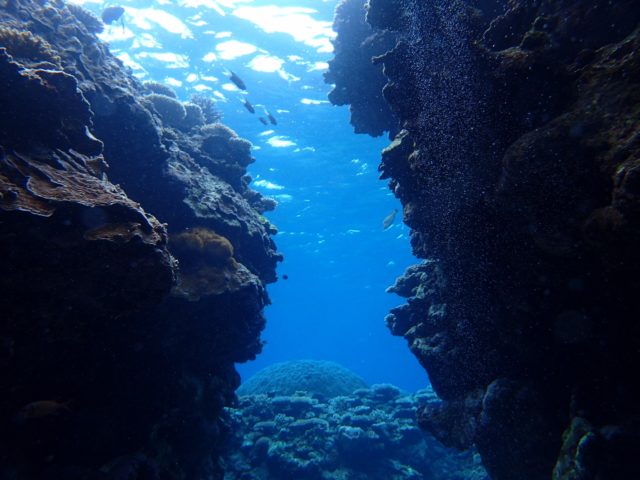
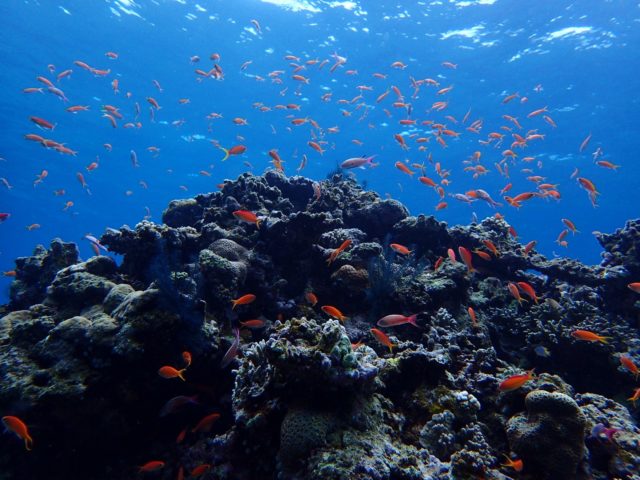
The sea of Ishigaki Island with its abundant coral reefs is the perfect place for diving.
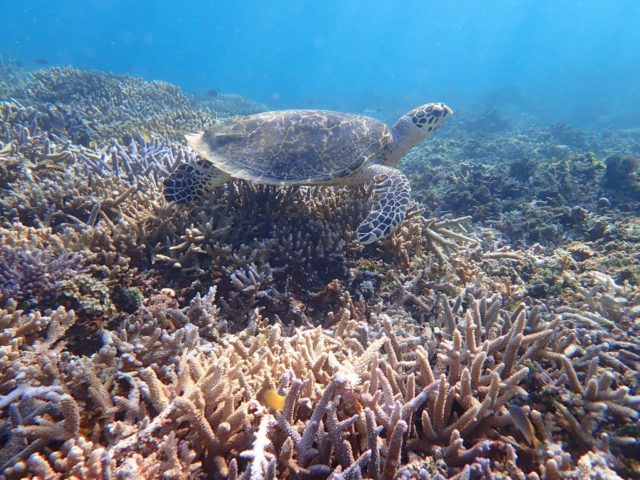
There are dozens of other dive sites where you can encounter sea turtles and manta rays.
Here is a sampling of some of the dive sites.
Diving Spots in Ishigaki Island (1)
Osaki Minocasago Palace.
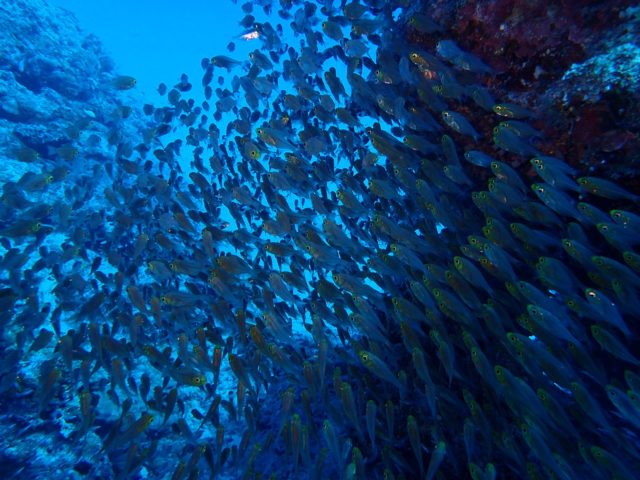
The first spot I would like to introduce is "Osaki Minocasago Palace".
Of course, you can appreciate the coral reefs, but what I recommend here is the many fish-watching opportunities.
As the name of the spot suggests, minnow scorpionfish can be seen swimming comfortably, and a variety of other fish can also be observed, including the Nichirin datelid goby, jawfish, lingcod, and sunfish.
Because there is almost no current, this spot is recommended for both beginners and advanced divers!
Diving Spots on Ishigaki Island (2)
Itona Dome
The next one we will introduce is "Ituna Dome".
Idona Dome is a beautiful diving spot with sunlight blowing through it, located in the northern part of Ishigaki Island.
As you proceed through the L-shaped cave from the 12-meter-deep entrance, sunlight pours down from the ceiling and illuminates the inside of the cave in blue, creating an extremely beautiful and mysterious sight.
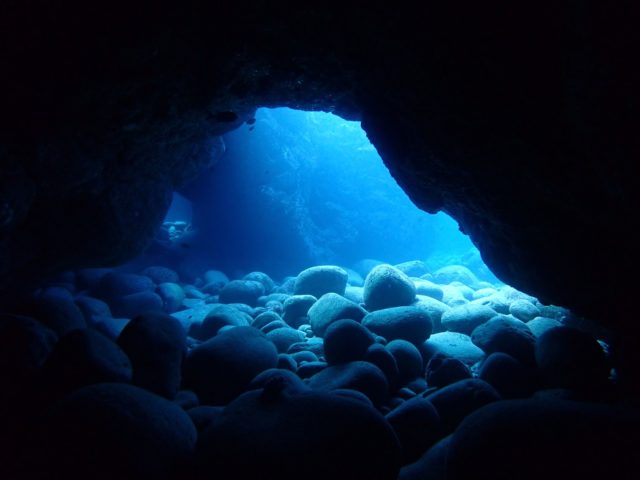
There is also a coral field inside the cave, which is home to lobsters and fish. It is also good to visit in early spring as this is where the kobushi shime spawn.
This spot, like the Osaki Minnow Scorpionfish Palace, has a low current and can be enjoyed by beginners.
Diving Spots on Ishigaki Island (3)
Nagura Coral Garden
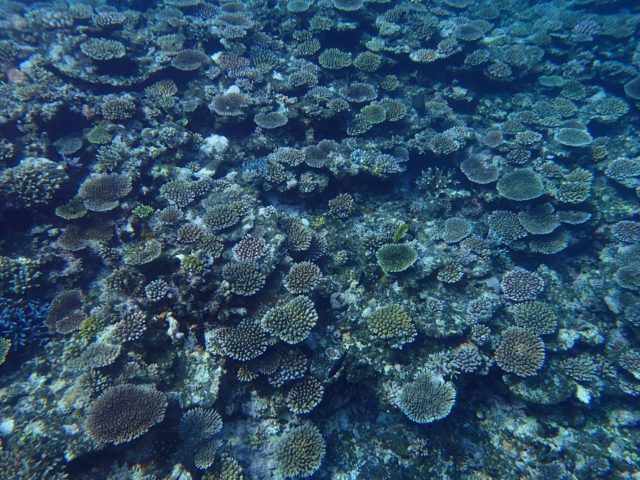
As the name suggests, Nagura Coral Garden is a spot where beautiful coral remains.
This spot, located in Nagura Bay, has colorful corals that remain in beautiful condition due to its environment.
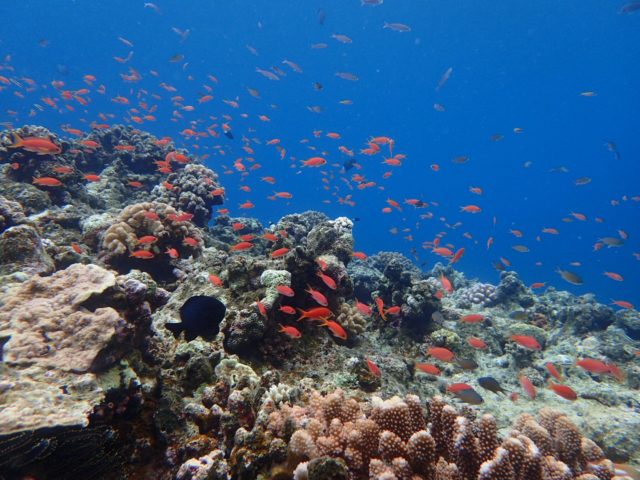
Because of the good condition of the coral, the area is also home to a healthy population of spiny dogfish, red-eyed goby, and other creatures. There is also a wide variety of coral species.
This is a very valuable marine area, as it is rare for multiple species to grow in clusters in the same location.
Diving spots on Ishigaki Island (4)
."Ishizaki Manta Scramble."
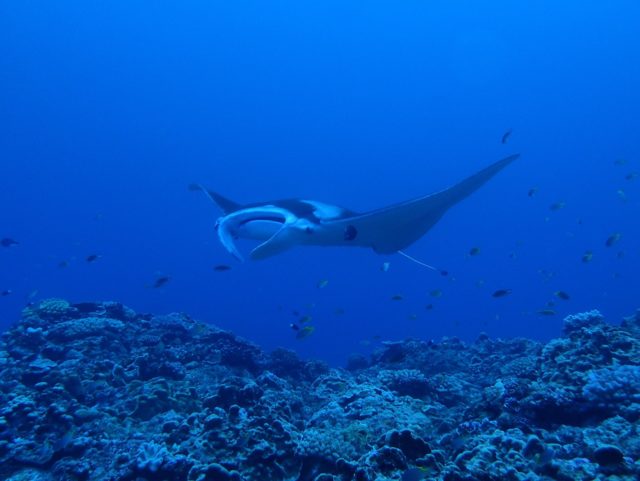
The last spot I would like to introduce you to is "Ishizaki Manta Scramble".
Ishizaki Manta Scramble is known for its beautiful corals and many rare species growing wild.
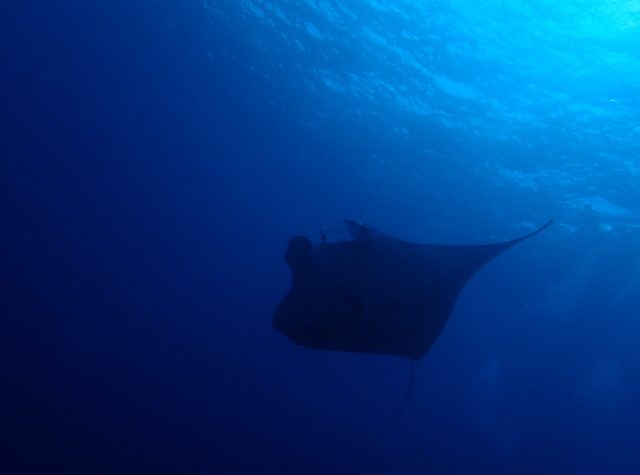
The greatest feature of this spot is that it has the world's highest manta ray encounter rate. The name of this spot is so well known that you can encounter manta rays at a very high frequency!
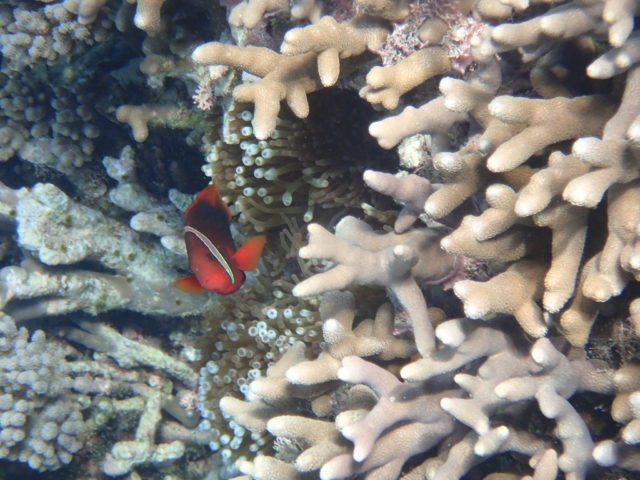
In addition to manta rays, this dive site is home to many other unusual creatures such as sea turtles, rock cod, anemone crabs, and the yellow-headed swallower fish.
What is the bleaching phenomenon on Ishigaki Island?
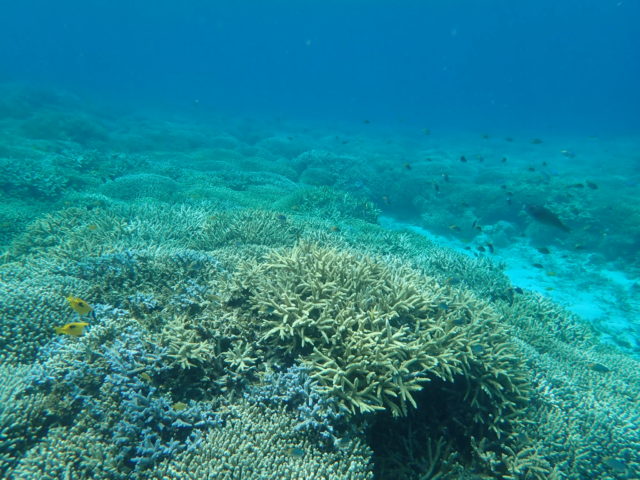
You have probably heard the term "coral bleaching" at least once.
Corals live in symbiosis with algae called zooxanthellae, which have brightly colored pigment bodies.
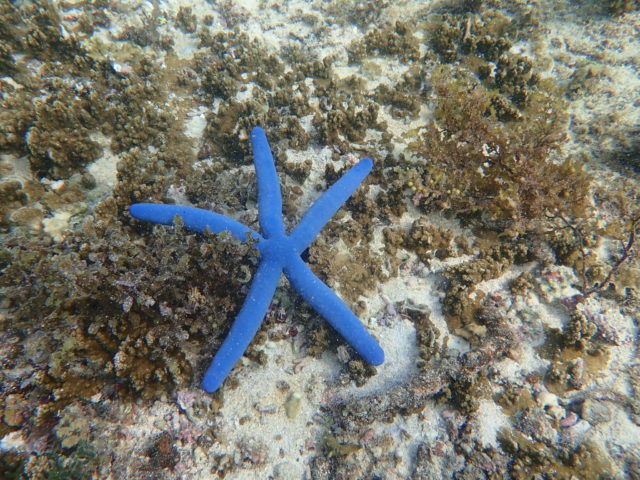
When the symbiotic algae die, the coral dies at the same time, and the algae lose their color and become nothing but a pure white shell."albinism" is triggered.
This bleaching phenomenon has been known to occur in many parts of the world, but in recent years it has also been observed in various parts of Okinawa, which has some of the world's best coral reef zones.
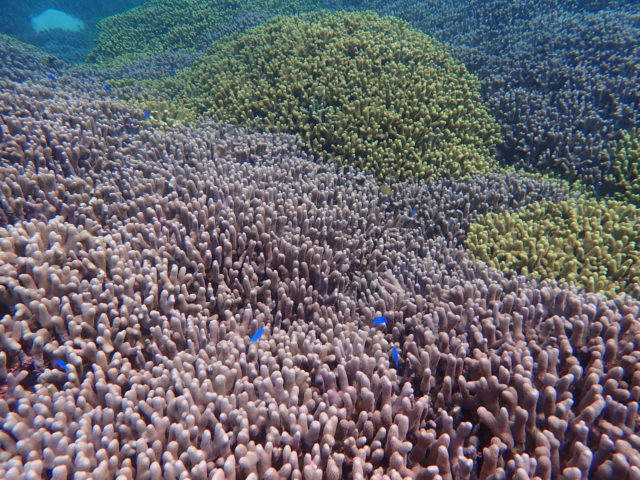
The main cause is the death of symbiotic algae within the coral body due to an abnormal rise in seawater temperature.
Corals that have bleached can survive for a while, but if the bleaching is prolonged, the coral will die.
In addition, although the water will gradually recover if the sea water temperature is lowered, recovery cannot be expected in a short period of time, so it is necessary to patiently develop countermeasures.
Although the main cause of bleaching is rising water temperatures, other factors such as red soil flowing into the sea and seawater pollution from domestic wastewater are also believed to contribute to this phenomenon.
Therefore, each citizen must be aware of the need to protect coral.
WWF Coral Reef Conservation Research Center "Shiraho Coral Village

The sea of Shiraho, Ishigaki Island, is a precious habitat for more than 120 species of corals and 300 species of fish, including one of the largest blue coral colonies in the world.
WWF Japan has established the Shiraho Coral Village for its conservation and is promoting conservation activities in cooperation with the local community.
Coral Reef Damage Survey by Ministry of the Environment
The Ministry of the Environment conducted a bleaching survey of Ishinishi lagoon, the largest coral zone in Japan; the survey was conducted twice a year at 35 sites, and bleaching was confirmed in 97% of the sites.
The Great Barrier Reef, the world's largest coral reef zone, is also experiencing large-scale bleaching, which is a serious problem.
Coral Status of Shiraho Coast
WWF Japan's Shiraho Coral Village began research and protection activities in 2010, and in the 2018 survey, coral cover improved from 6.261 TP3T to 11.21 TP3T.
Many corals died due to bleaching caused by rising sea temperatures, but surviving individuals are recovering.
Although global warming is a major issue, the first priority is to prevent domestic wastewater and red soil from entering the ocean.
Coral Transplantation

Coral cultivation and transplantation are also being considered, as the effects of bleaching have become more pronounced in recent years.
Although still on a trial basis, the transplantation experiment was conducted as an environmental education experience program for tourists and elementary school students.

Transplanting was conducted based on seedlings cultivated by the Coral Cultivation Research Group of the Yaeyama Fisheries Cooperative's Ornamental Fisheries Division.
As we look to the future, we are filled with hope that tourism businesses and fishermen, who use the sea as a place to work and live, can work together to improve the marine environment.
Coral Foundation

The bleaching phenomenon is significant."Lake Shihshihshan"This fund was set up to save the coral reefs of the "Bleaching by high water temperatures," massive outbreaks of crown-of-thorns starfish, red soil runoff and water pollution.
Officially known as the Ishisei Lagoon Coral Reef Fund, this fund was established by the Ishisei Lagoon Nature Restoration Council to restore the original coral reefs of Ishisei Lagoon.
The money raised will be used to reduce red soil runoff from sugar cane fields."summer planting"From."stock issueThe funds are being used to promote the conversion of agricultural practices to "coral reefs" and for the Coral Watch project, in which local residents check the health of their own corals.
With further support, we will work hard on projects to mitigate impacts, such as red soil runoff prevention and domestic wastewater control.
Please support us by visiting our website regarding the Ishinishi Jagako Coral Reef Fund and our Japan Post Bank transfer account.
Protecting the Coral Reefs of Ishigaki Island
important point
We have touched on issues that need to be addressed for local residents to protect the coral reefs of Ishigaki Island, such as the problems of domestic wastewater and red soil.
This is an issue that not only local residents but all who use the ocean should be aware of and work on.
There are a few things that tourists should be aware of.
The reef can be destroyed by touching or hitting it during snorkeling, diving, or other leisure activities.
This is very valuable coral. Never touch them.

snorkelWe sometimes see people diving in prohibited areas where they are not allowed to dive or dive in the first place.
If the spot is not used for much recreation, it is difficult to understand the terrain and may collide with coral.
You may have unknowingly entered a prohibited area.
To avoid such a situation, we will be guided by professionals.Safety and SecurityPlease enjoy the sea of Ishigaki Island!
Furthermore, the use of underwater guns with firing devices is prohibited in Okinawa Prefecture, except for fishermen, but there are people who break this rule as well and catch fish.
Do not do this as it will result in poaching before the coral is damaged.
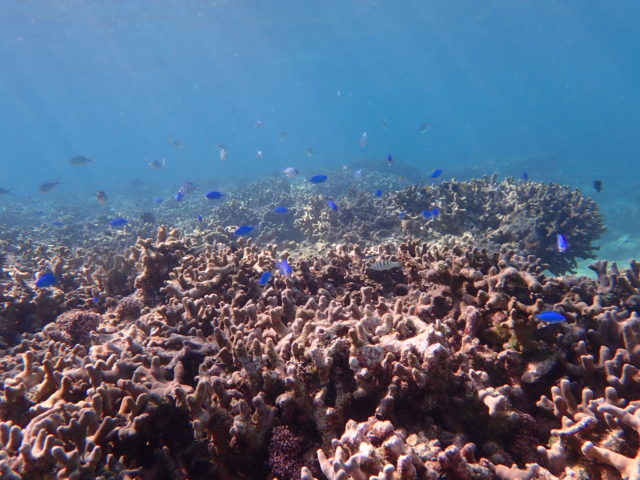
The beautiful coral will be restored through the efforts of each and every user of the ocean, and everyone will be able to enjoy leisure activities in the beautiful ocean.
Conclusion
We introduced the charms of Ishigaki Island's coral reefs.
There are many diverse types of corals, many spots to visit, and many points of interest to enjoy.
However, corals around the world are in danger due to the ongoing bleaching phenomenon caused by environmental destruction.
Let's think again about how we can protect coral with just one thought, and enjoy fun marine recreation while protecting the beautiful coral that has been regenerated!
Thank you for taking the time to read this to the end.
This article was written by.