

Local Column
COLUMN
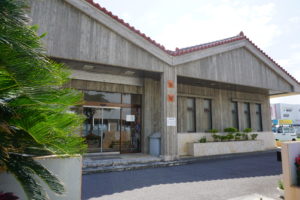
How to get to and play at the Yaeyama Peace Memorial Hall, a tourist attraction on Ishigaki Island!
Hello everyone! Do you know Yaeyama Peace Memorial Museum in Ishigaki Island? Yaeyama Peace Memorial Museum was established in 1999 as a branch of Peace Memorial Museum in Okinawa Island, and it preserves the history so that people will never forget the cruelty of war and the horror of malaria.
It is often visited by locals, history buffs, and children visiting for social studies tours. This article introduces the Yaeyama Peace Memorial Hall on Ishigaki Island.
Table of Contents
About Yaeyama Peace Memorial Hall
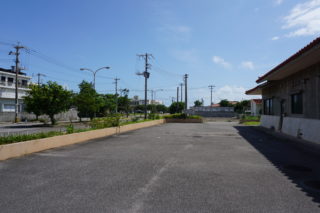
The Yaeyama Peace Memorial Hall was established in 1999 as a branch of the Peace Memorial Museum on the main island of Okinawa, with the aim of accurately conveying the reality of war malaria to future generations, building a society that guarantees human dignity, and creating a "base for transmitting peace" from the Yaeyama area to the world. The Peace Memorial Hall is a memorial to the war dead.
War malaria is an event that occurred at the end of World War II, when the inhabitants of the Yaeyama Islands were forced to evacuate to an area where malaria was endemic and contracted it, killing some 3,600 people. This memorial hall introduces the reality of war malaria through photos, documents, and videos, and aims to be a center for transmitting the message of peace from the Yaeyama area to the world, appealing for the realization of permanent peace.
Directions to Yaeyama Peace Memorial Hall
Access by car
If you rent a car from Ishigaki Airport, drive south on Route 390 along Miyara Bay. Turn right at the first crossing of Isobe River. Go to the end of the road and turn left. Turn right at the next intersection and continue straight down the Seed-Line all the way to City Hall Road. Turn right on the street before the gas station and immediately turn left. Follow the road behind the gas station to get there. Arrival time is about 30 minutes.
If you are going from Ishigakijima Remote Island Terminal, go north to the 730 Monument and turn left toward Shiyakusho Dori (City Hall Street). Follow the road to the Shinkawa police box on your left, and the Yaeyama Peace Memorial Hall is the building on the left side of the street. It takes about 5 minutes to get there.
Access by bus
Head to Ishigaki Bus Terminal. There are two types of buses, one via Heitoku, Ohama, and Shiraho, and the other via Nikko Yaeyama and ANA Intercontinental, depending on your arrival time. The buses run every 30 minutes, so you can get from the airport to the city bus terminal approximately every 15 minutes. If you go via Heitoku, Ohama, or Shiraho, you will arrive 10 minutes earlier. From the Ishigaki Island Bus Terminal, take the Higashi Unyu Bus, Yaeyama Hospital Line right in front of the Yaeyama Peace Memorial Hall. The arrival time is about 40 minutes.
More information about Yaeyama Peace Memorial Hall
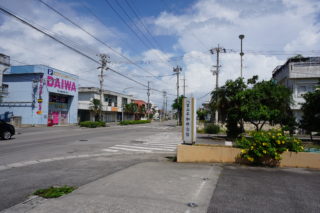
The Yaeyama Peace Memorial Museum, established in 1999 as a branch of the Peace Memorial Museum on the main island of Okinawa, aims to accurately convey the reality of war malaria to future generations and to serve as a center for transmitting the message of peace from the Yaeyama region to the world, calling for the realization of lasting peace. In the Yaeyama archipelago, it has long been known that malaria outbreaks, known as "Yaeyama fever," existed in many areas, and since the days of the Kingdom of the Ryukyus, the history of the outbreaks has been repeated as the land was cultivated and the inhabitants were wiped out. Although there are no outbreaks of malaria today, there were still outbreaks during World War II.
The Yaeyama Islands were not landed by U.S. forces, but were subjected to air raids and artillery fire. In the midst of this, evacuation took place, and moreover, people were forced to move to areas where malaria occurred. Ishigaki Island had been subjected to heavy air raids and naval gunfire since the air raids began in 1944. This forced the evacuation, and residents were forced to move from suburban areas to mountainous regions.
Residents of Hateruma Island and Kuroshima Island were ordered to evacuate as well, and discussions were held among the islanders to decide where to evacuate. Some evacuated to Yubu Island in the eastern part of Iriomote Island, a malaria-free area, but most of them evacuated to Minamikazumida in the southeast of Iriomote Island where there were many caves and no fear of air raids. However, Minamikazumida was an area where malaria occurred, and the village was forced to be closed in 1920.
Most of the evacuees were housed in communal thatched-roof huts with just enough rain and dew to shelter them from the rain. They were unable to hang mosquito nets and used unsanitary communal latrines, which led to mosquito infestations and increased the damage. The lack of medical supplies and malnutrition continued intermittently, and the damage from malaria spread, with many sick people lying in the huts and deaths occurring one after another. The number of victims of malaria far outnumbered those of combat.
Therefore, a memorial stone was carved in Iriomote Island to remember that many of the residents of Hateruma Island were forced to evacuate to the beach and many of them lost their lives due to malaria. In order to pray for lasting peace, a monument was erected in the southern sea where Hateruma Island is clearly visible, and a memorial service is held there every year.
The museum introduces the reality of war malaria through photos, documents, and videos, and works to keep the horror of malaria and the tragic memories of war alive, aiming to become a center for transmitting the message of peace from the Yaeyama area to the world.
The exhibits are organized in the following order: the Battle of Okinawa resulting from the Asia-Pacific War, the Battle of Okinawa and Yaeyama, the tragedy of war malaria, the eradication of malaria, the activities of the War Malaria Relief Association, and the aim to become a center for peace communication in the Yaeyama region. The book is an easy-to-understand summary of how the victims of war and malaria lived after the war.
Depending on the time of the year, there are also information sessions for school teachers and events for children during the summer vacation, providing a good opportunity to learn about Ishigaki Island in the wartime and postwar periods. Especially on Memorial Day, June 23, a one-day event is held.
There is also a monument for the Yaeyama War Malaria Victims near the south entrance of Banna Park, which you can visit after the memorial if you have time. It is relatively close to Yaeyama Peace Memorial Hall (10 minutes by car), so it is easy to visit.
How to play Yaeyama Peace Memorial Hall
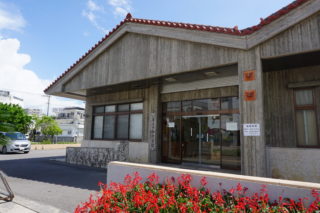
The Yaeyama Peace Memorial Hall introduces the reality of the tragic experiences that occurred during the war in the Yaeyama area through photos, documents, and videos, and works to keep the fear of malaria and the tragic memories of the war from fading away. This will be a good teaching tool to teach the tragedy of war and the fear of viruses. Why not visit as part of your learning experience on your trip? There is a monument of Yaeyama War Malaria Victims Memorial near the south entrance of Banna Park, so if you have time, why don't you visit there after the memorial hall? It is relatively close to Yaeyama Peace Memorial Hall (10 minutes by car), so it is easy to visit.
In front of the Yaeyama Peace Memorial Hall stands the Gushiken Yoshitaka Memorial Hall. Gushiken is a former boxer and a legendary boxer who left behind a terrible record of 13 consecutive defenses as the WBA World Jr. Flyweight Champion. The museum exhibits gloves, championship belts, trophies, and other items used in his fights, and videos of his defenses are always on view.
We invite you to visit the memorial museum about the great star of Ishigaki Island.
Address: 79 Shinsakae-cho, Ishigaki City, Okinawa, Japan
Business hours: 9:00 - 17:00
Open: Tuesday - Sunday. Closed during the year-end and New Year's holidays and Memorial Day.
Admission: Adults 100 yen. Admission for groups of 20 or more: Adults: 70 yen, Children (elementary, junior high, high school, and university students): 50 yen. Children (elementary, junior high, high school, and university students): 35 yen.
Parking: Free (10 cars and 2 large buses can be parked)
summary
We introduced Yaeyama Peace Memorial Hall. How was it?
Okinawa was the only place in Japan where mainland warfare took place during World War II. The Yaeyama Islands were also affected by the war, and the most common example of this is war malaria. The Yaeyama Peace Memorial Hall is the place to learn about the war malaria. The Yaeyama Islands were damaged by war such as air raids, but many people lost their lives due to malaria, especially the residents of Hateruma Island and Kuroshima Island who evacuated to Iriomote Island. The total number of victims in the Yaeyama Islands as a whole was 3,647, which shows the seriousness of the damage.
The Yaeyama Peace Memorial Hall is recommended as follows.
Learn about the cruelty and tragedy of war.
Easy-to-understand materials and other war studies.
Please check the above and visit the Yaeyama Peace Memorial Hall.
Thank you for reading to the end.
This article was written by.